


An Early Spring in the Wasatch
By Jillian Perry, CWC Youth Council Member
Every spring, melting snow makes a mass migration down the faces and valleys of the Central Wasatch Mountains before reaching its final destination in the Great Salt Lake. Snowmelt is the backbone of our water supply in the Wasatch. Even seemingly small fluctuations in our snow season can have far-reaching consequences for the remainder of the year.
This year, on top of a record-low snowpack, the Wasatch also had an exceptionally early spring runoff. This is reflected in the unusually early snow water equivalent (SWE) peaks. Snow water equivalent is a measurement of how much liquid water is available in the snowpack and that will be released as the snow melts. SWE can vary greatly between fluffy, powdery snow and heavier, slushy snow. Although the date of the SWE peak alone does not determine when spring runoff will occur, this date marks the transition from the accumulation phase to the melting phase. According to data from the snow telemetry site at Snowbird, this year’s SWE peaked on March 9, whereas in 2025 it peaked on April 10, and in 2024 it peaked on April 8. A similar pattern was present at the snow telemetry site at Brighton, where this year’s SWE peaked on March 9, in 2025 SWE peaked on April 8, and in 2024 it peaked on April 11. This year’s snow water equivalent peaked nearly a month earlier than in recent years. On top of that, record-breaking spring temperatures caused rapid melting. Salt Lake City saw its earliest 80-degree day on record on March 19 of this year, accelerating snowmelt and kickstarting runoff in the Wasatch.

What does this earlier-than-normal melting mean for the Central Wasatch and the communities that rely on it?
The Central Wasatch Mountains host an assortment of riparian plant communities lining the streambanks and surrounding areas of the creeks and tributaries that flow through its valleys. These species depend on a continual supply of steady snowmelt and nutrients throughout the spring and summer months. This year’s rapid melt has left these species in compromised health going into the dry summer months.
For instance, given their low to moderate resistance to drought, native plant species such as red-osier dogwood and yellow willow will likely have difficulty later this year as streamflow in riparian areas continues to decline.
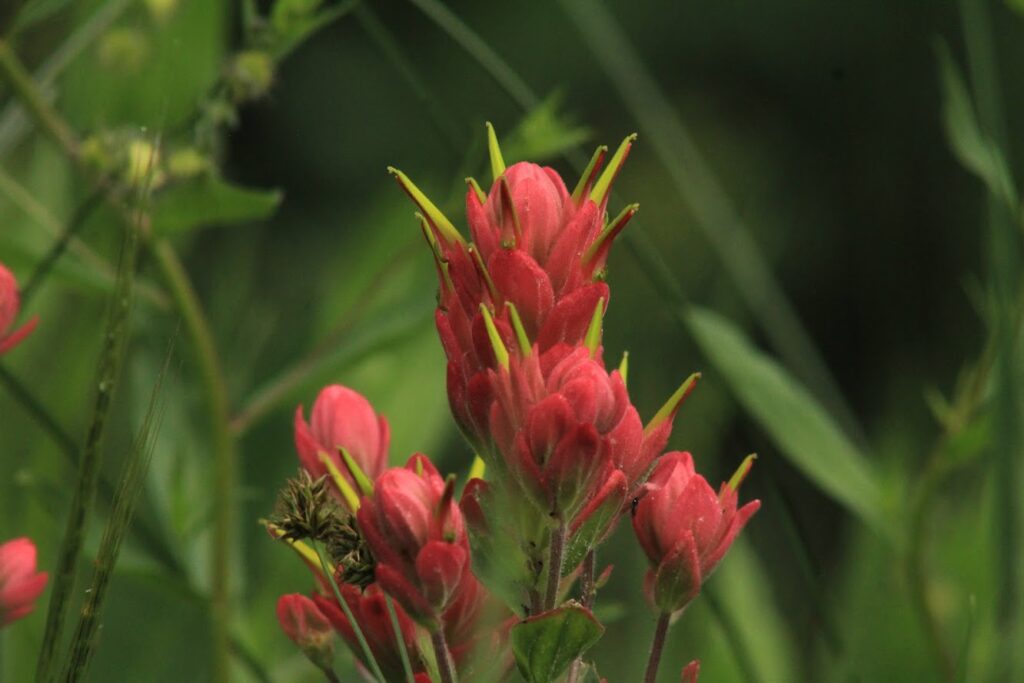
Wildflowers have also been affected. Spring in the Wasatch is typically marked by yellow bell and glacier lily blooms. This year, early melting caused the flowers to bloom early, which can pose threats to the pollinators that rely on them. After dormancy over the winter months, pollinators emerge expecting these blooms at a predictable time, and shifts in flowering can reduce food availability during this critical time.
Similarly, human communities have also been affected. Snowmelt is responsible for the majority of annual reservoir filling. Although dams are designed to store water for as long as needed, they
rely on a gradual influx throughout the spring to handle water demands throughout the season. This year, they filled all at once early on, leaving less water for later summer needs. For example, at Echo Reservoir, rather than continuing to fill throughout the spring and early summer months, as it typically does, the reservoir began declining immediately after the early runoff filled it. Currently, Echo Reservoir is sitting at 44% full and steadily declining, despite the recent summer monsoons. Recent precipitation in the Wasatch has not contributed to reservoir filling, as the majority of precipitation has seeped into dry, thirsty soils before ever reaching reservoirs.
Overall, early spring runoff in the Central Wasatch this year has had a cascading effect in many different ways. Plant, animal, and human communities alike are all feeling the consequences. Early spring snow water equivalent peaks, on top of high temperatures, have compromised ecosystem health, as well as urban water storage. This unusual spring speaks volumes about our quickly changing climate and the rippling effects it has on nearly every aspect of the Central Wasatch Mountains.
Jillian Perry has been a member of the CWC Youth Council since its beginning in 2023. She grew up in Park City, Utah, where she spent nearly all of her free time in the Wasatch. She graduated from the University of Utah in 2025 with a B.S. in Environmental and Sustainability Studies and a minor in Spanish, and she is currently the Administrative and Outreach Manager at Recycle Utah.